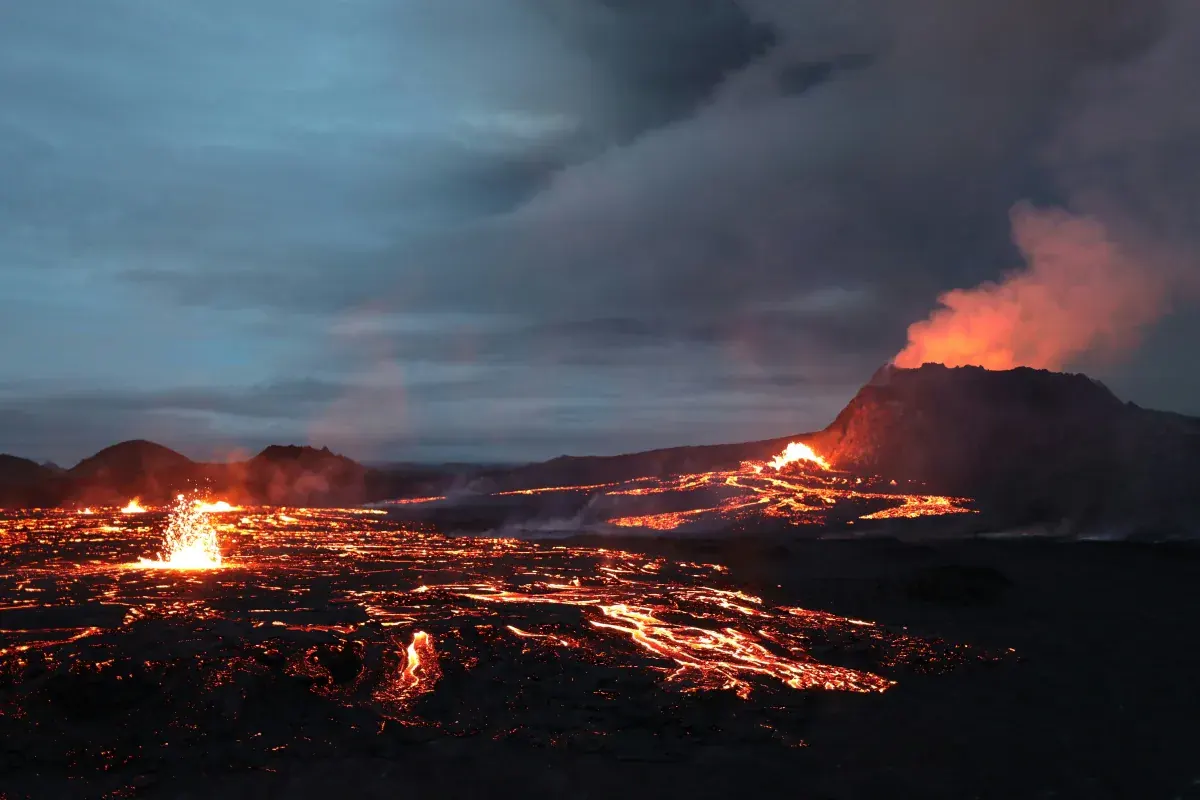
Earthquake and volcano predictions 2026: causes, forecasting, and live tracking

Earthquakes and volcanic eruptions are graded on two distinct scientific scales. An earthquake's magnitude measures the total seismic energy released at its source, as published by the United States Geological Survey (USGS). Because the moment magnitude scale is logarithmic, each whole-number increase represents roughly 32 times more energy. An eruption's size is graded on the Volcanic Explosivity Index (VEI), a 0-to-8 scale based primarily on the volume of material ejected, assigned by the Smithsonian Global Volcanism Program after an eruption ends.
Seismologists and volcanologists evaluate these natural hazards using historical catalogs, seismic monitoring networks, and satellite geodesy. While major seismic events and explosive eruptions cannot be predicted on specific calendar dates, long-term frequency models track regional fault stress and volcanic activity to estimate the likelihood of future events across defined geographic areas.
What causes earthquakes?
Earthquakes are caused by rock breaking and slipping along a fault, releasing elastic strain energy that has built up in Earth's crust. Earth's outer shell is broken into tectonic plates that constantly move past, pull away from, or collide with one another. Where two plates lock together, friction prevents immediate movement while the surrounding rock deforms. When accumulated stress overcomes friction, the rock snaps into a new position and radiates the stored energy as seismic waves.
Because tectonic stress accumulates along plate boundaries, a global map of major earthquakes closely traces these active edges, particularly around the Pacific Ring of Fire. Subduction zones, where one dense tectonic plate descends beneath a lighter overriding plate, produce the largest and deepest earthquakes ever recorded.
Plate boundaries are not the only locations where earthquakes occur. Fault lines located deep within plate interiors can also slip, causing damaging intraplate earthquakes far from any tectonic edge. For localized surface shaking, an earthquake's depth is just as important as its magnitude, as shallow events release energy closer to human structures.
Can earthquakes be predicted?
Individual earthquakes cannot be predicted. The USGS states plainly that neither its scientists nor any other researchers have ever successfully predicted a major earthquake. A valid prediction would need to specify three exact elements in advance: the date and time, the location, and the magnitude. To date, no reliable precursor signal or physical warning sign has been identified prior to a fault rupture.
Long-term forecasting is a different scientific discipline, and it works effectively. Seismologists calculate the probability that a specific region will experience an earthquake above a given magnitude within a multi-year window. These forecasts rely on mapped fault geometries, historical strain accumulation rates, and paleoseismic records. Following major events, geophysicists also issue short-term aftershock forecasts to estimate the decaying rate of secondary tremors.
These probabilistic models describe frequencies across years rather than exact dates. By evaluating cumulative fault stress and historical recurrence intervals, geophysicists outline regional hazard levels, providing the only form of seismic forecasting supported by current science.
What is the biggest earthquake ever recorded?
The largest earthquake ever recorded was a magnitude 9.5 that struck southern Chile on May 22, 1960. According to the USGS, the four largest recorded events are Chile (1960), Alaska (1964), Sumatra (2004), and Tohoku, Japan (2011).
A magnitude 10.0 earthquake has never been recorded and is physically impossible, because earthquake magnitude scales directly with fault rupture length, and no single fault long enough exists on Earth.
Major earthquakes and eruptions.
- Dec 2004: A magnitude 9.1 earthquake off Sumatra triggered a massive Indian Ocean tsunami that killed approximately 228,000 people.
- Jan 2010: A magnitude 7.0 earthquake struck near Port-au-Prince, Haiti, causing catastrophic damage and resulting in death toll estimates ranging from 100,000 to over 300,000.
- Apr 2010: Ash from the VEI 4 eruption of Eyjafjallajokull in Iceland disrupted European commercial air travel for six days.
- Mar 2011: The magnitude 9.1 Tohoku earthquake off Japan drove a severe tsunami that caused the Fukushima Daiichi nuclear accident.
- Apr 2015: Nepal's magnitude 7.8 Gorkha earthquake killed nearly 9,000 people and destroyed thousands of historic structures.
- May 2018: Lava from Kilauea's lower East Rift Zone eruption destroyed over 600 homes in Hawaii, accompanied by a major summit caldera collapse.
- Jan 2022: The Hunga Tonga-Hunga Ha'apai eruption became the most explosive event of the satellite era, generating atmospheric pressure waves that circled Earth four times.
- Feb 2023: Magnitude 7.8 and 7.5 earthquakes struck southern Turkey and Syria nine hours apart, killing more than 59,000 people.
- Jul 2025: A magnitude 8.8 earthquake off the Kamchatka Peninsula marked the most powerful seismic event recorded globally since the 2011 Tohoku quake.
Earthquake and volcano prediction markets.
events · marketsFrequently asked questions.
Expert take.
Earthquakes
What causes an earthquake, how magnitude is measured, the largest US quakes and where damaging shaking is most likely.
What does earthquake magnitude mean?
Magnitude is logarithmic: a magnitude 5 shakes the ground 10 times more than a 4 and releases about 32 times the energy.
What are California's earthquake odds?
USGS puts California's 30-year odds of a magnitude 6.7 or larger quake above 99%, with odds for two main regions.
More in Climate & Weather.

2026 Heat & Temperature Predictions: Hottest Year Markets
Live market prices on 2026 heat and temperature records: the hottest year, daily city highs, heat domes, Arctic sea ice, and atmospheric CO2, set against NASA, NOAA, and NSIDC data.

Pandemic Markets 2026: Bird Flu, Measles & Ebola Predictions
A large Ebola outbreak is a declared emergency that WHO says is not a pandemic. See how a pandemic actually gets declared, the record since 2000, and the live markets pricing bird flu, measles, and Ebola.
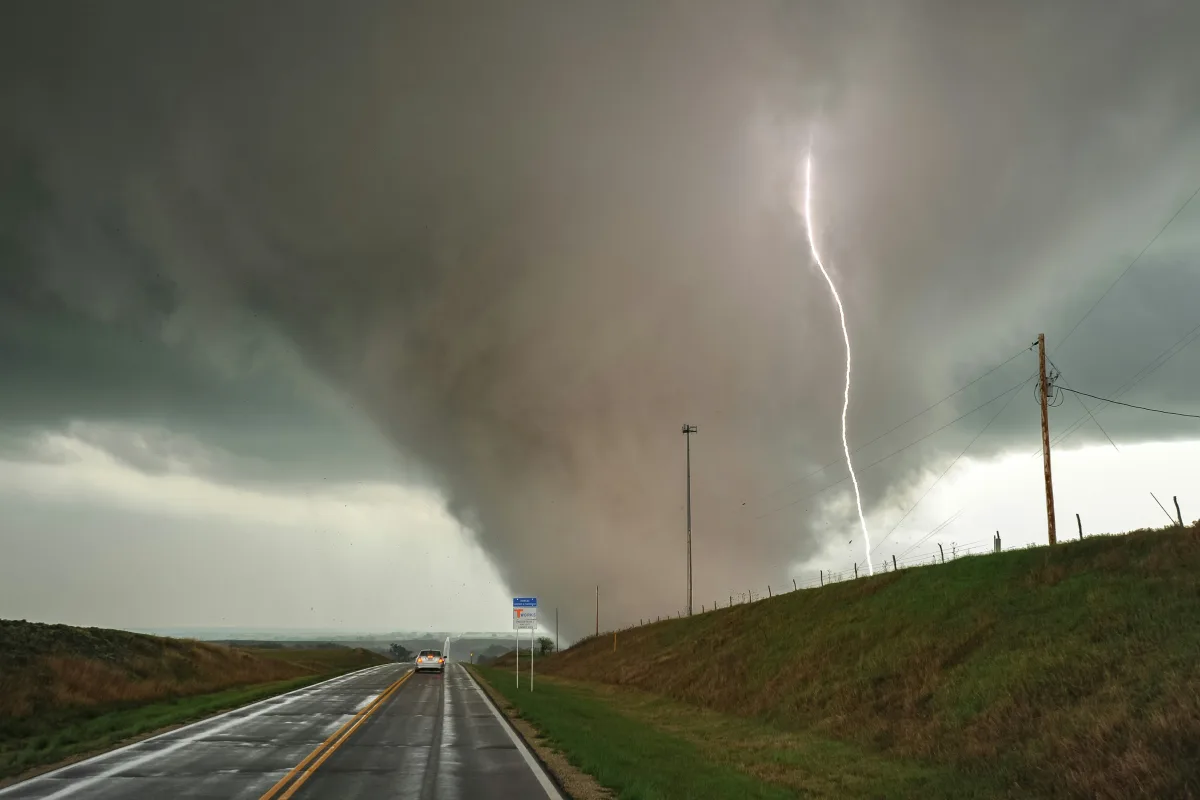
2026 US Tornado & Severe Weather Season Prediction Markets
Live 2026 US tornado and severe weather season markets: annual and monthly tornado counts, peak wind, and storm-belt rain across Polymarket and Kalshi.
Climate & Weather explainers.
Drought Basics: Types, Severity Scale and History
The types of drought, the D0 to D4 severity scale, and the worst droughts in US history.
Severe Storm Basics: Tornadoes, Hail and Wind
Tornado ratings, how severe thunderstorms form, the seasonal pattern, and the records.

Earthquake Basics: Faults, Magnitude and US Risk
Faults, magnitude, the largest US earthquakes, and California's 30-year odds.