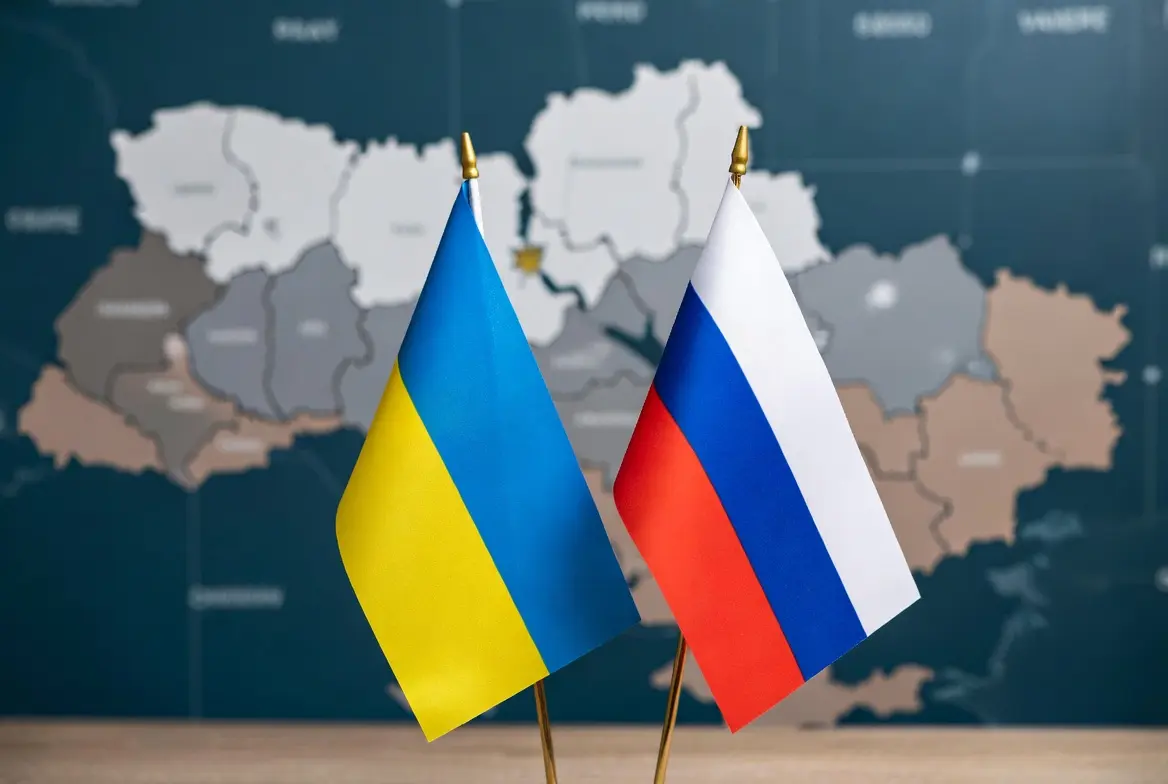
Russia-Ukraine war 2026: elections under martial law, territorial control, NATO accession, and how ceasefire markets settle

Russia's full-scale invasion of Ukraine began in February 2022, and Ukraine has remained under martial law ever since. In Ukraine, martial law is a formalized legal regime rather than merely a description of active combat. Introduced by presidential decree and approved by the Verkhovna Rada (Ukraine's parliament), the regime explicitly suspends presidential, parliamentary, and local elections, as well as national and local referendums, while martial law remains active.
The war's legal and geopolitical landscape spans four primary areas: the constitutional timeline for holding elections once martial law ends, the verification mechanisms used to track changes in territorial control, the multi-stage requirements for NATO accession, and the specific criteria governing official ceasefire agreements and peace negotiations.
How does Ukraine hold elections under martial law?
Ukraine does not hold elections under martial law, because Ukrainian law explicitly prohibits them. Article 19 of the Law of Ukraine On the Legal Regime of Martial Law prohibits elections for the President of Ukraine, the Verkhovna Rada, the Crimean parliament, and local government bodies, while also banning national and local referendums while martial law is in effect. Article 83 of the Constitution of Ukraine addresses legislative continuity: if a parliament's term expires during martial law, its powers are extended until the first sitting of the newly elected parliament following the cancellation of martial law.
Re-establishing electoral processes requires a defined legal sequence once martial law is formally lifted. The Electoral Code of Ukraine specifies that once martial law terminates, the authority responsible for calling an election has up to one month to set the official voting date. Furthermore, the martial law statute grants the Verkhovna Rada up to 90 days to officially schedule the local and Crimean elections deferred during the emergency period.
The extension of martial law occurs through periodic presidential decrees submitted to parliament for approval, with each extension renewing the legal prohibition on national elections.
How is control of a city or territory decided for settlement?
Determining territorial control in active conflict zones relies on independent geographic mapping rather than unilateral military claims issued by combatants. Standard conflict mapping tracking relies on daily spatial assessments published by open-source research bodies, primarily the Institute for the Study of War (ISW) alongside secondary analytical mapping platforms like DeepStateMap.
Geographic assessments classify control using distinct analytical layers. A full municipal capture requires that the entirety of a settlement's administrative boundaries be shaded under assessed enemy control or recent 24-hour advances, explicitly excluding temporary infiltration zones where continuous physical control has not been established.
Conversely, entry into a municipality is recorded when hostile forces reach any portion of an administrative boundary, including verified infiltration areas. Regional territorial shifts require simultaneous verified control across all constituent municipalities before an entire province or district is classified as controlled.
What would Ukraine joining NATO require?
Ukraine joining NATO requires the unanimous agreement of all existing member nations and the formal deposit of an instrument of accession. Article 10 of the North Atlantic Treaty defines the accession framework: member parties may by unanimous agreement invite any other European state in a position to further the principles of the treaty to accede. The invited nation becomes a full member upon depositing its instrument of accession with the United States Government in Washington, D.C.
The formal accession process involves several administrative and political steps, including formal accession talks at NATO headquarters, an official letter of intent from the invitee, accession protocols signed by all current allies, and individual national ratification by each member country according to its constitutional procedures.
Alliance declarations have modified specific preliminary requirements while keeping the consensus mandate intact. According to the Vilnius Summit Declaration, allies agreed that Ukraine's path no longer requires a formal Membership Action Plan (MAP), while the Washington Summit Declaration described Ukraine's integration path as irreversible, maintaining that a formal invitation will be extended when all allies agree and conditions are met.
What has to happen for a Russia-Ukraine ceasefire to hold, and how do ceasefire markets settle?
A binding ceasefire requires a mutually agreed, general cessation of military operations across active combat zones. Standard international frameworks distinguish between temporary tactical pauses, sector-limited humanitarian corridors, and comprehensive bilateral ceasefires.
A formal ceasefire agreement takes effect when both national governments officially announce or confirm a halt to direct offensive engagements across the primary theater of operations. To establish durability, international observers and field reporting monitor whether the suspension of artillery, airstrikes, and ground offensives remains continuously in effect across defined timeframes.
Comprehensive peace frameworks require documented legal instruments signed or formally adopted by authorized state representatives, establishing verifiable mechanisms for troop withdrawals, border monitoring, or long-term security guarantees.
Negotiation rounds, decrees and declarations, by date.
- Feb 2022: The President of Ukraine issued a decree establishing martial law on February 24, which was approved the same day by the Verkhovna Rada of Ukraine.
- Mar 2022: The UN General Assembly adopted Resolution ES-11/1 condemning the invasion of Ukraine.
- Jul 2022: Ukraine, Russia, Turkey, and the United Nations signed the Black Sea Grain Initiative in Istanbul according to UN records.
- Sep 2022: Official Russian state documents recorded a ceremony in Moscow concerning the administrative annexation of four Ukrainian regions.
- Oct 2022: The UN General Assembly passed Resolution ES-11/4 reaffirming the territorial integrity of Ukraine.
- Jul 2023: The Black Sea Grain Initiative expired after Russia formally ended its participation in the agreement.
- Jul 2023: The inaugural NATO-Ukraine Council met at the Vilnius summit, where allies removed the Membership Action Plan requirement for Ukraine.
- Jun 2024: Switzerland hosted the international Summit on Peace in Ukraine, producing a joint diplomatic communique.
- Jul 2024: The NATO Washington summit declaration affirmed Ukraine's trajectory toward Euro-Atlantic integration.
- Apr 2025: Temporary holiday ceasefires were declared for Orthodox Easter across specific operational sectors.
- May 2025: Delegation talks between Ukrainian and Russian representatives took place in Istanbul facilitated by the Turkish Ministry of Foreign Affairs.
- Jul 2025: Follow-up diplomatic delegation discussions convened in Istanbul to address humanitarian concerns.
- Dec 2025: Russian military reports issued statements regarding operational advances near Pokrovsk.
- Feb 2026: Technical military delegations from Ukraine and Russia held consultations in Abu Dhabi regarding practical operational issues.
- Feb 2026: Diplomatic representatives met in Geneva for multi-lateral talks concerning regional security.
- Apr 2026: Short-term Easter ceasefire announcements were issued covering specific operational sectors.
- May 2026: A 1,000-for-1,000 prisoner exchange was agreed under United States mediation, and its first stage returned 205 Ukrainians on May 15.
- Jun 2026: The leaders of the United Kingdom, France and Germany met Ukraine's president in London on June 7 and issued a joint statement on the next steps in negotiations.
- Jul 2026: The NATO Ankara Summit Declaration pledged ongoing financial, military, and training assistance for Ukraine.
- Jul 2026: The Verkhovna Rada approved a presidential decree extending martial law for an additional 90-day period.
- Sep 2026: International diplomatic envoys conducted parallel consultative visits to Moscow and Kyiv.
Russia-Ukraine war prediction markets.
events · marketsFrequently asked questions.
More in Politics.
2026 Midterm Election Prices: House and Senate Markets
House and Senate control, individual battleground races, and seat count prediction market prices on Polymarket and Kalshi.

Trump Presidency Tracker: Approval & Impeachment Markets
Live Kalshi and Polymarket prices on Trump's second term: how low approval goes, whether impeachment happens, who leaves the Cabinet, the pardon ladder, and the Greenland and 51st-state markets.

Supreme Court Predictions 2026-2027: Next Justice & Rulings
Track the ladder for the next Supreme Court justice, the retirement-watch contracts on Samuel Alito, and the pending cert petitions on sports event contracts, tariffs, and gun rights, priced live on Polymarket and Kalshi.