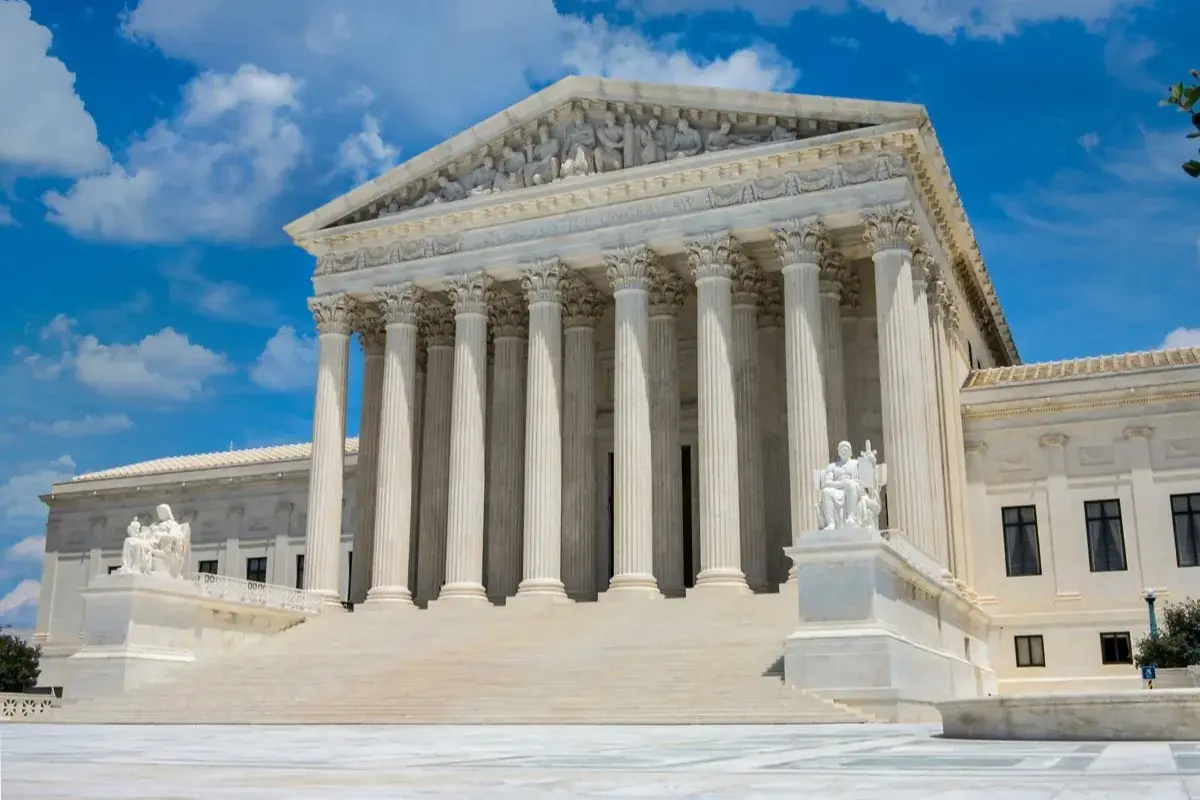
Supreme Court predictions 2026-2027: how justices are confirmed, when they retire, and when rulings are released

The Supreme Court of the United States is the country's highest court, consisting of nine members: one Chief Justice and eight Associate Justices, a number fixed by federal statute (28 U.S.C. 1) rather than by the Constitution. A justice reaches the bench only after the President nominates and the Senate confirms, holding the seat for life. According to the Supreme Court's own FAQ, justices hold their offices during good behavior, serving until they retire, resign, or die.
The Court operates on a structured annual calendar, considering thousands of legal petitions each term while selecting a small fraction for full oral argument. Judicial tenure transitions depend on individual decisions to step down or statutory retirement eligibility, while the Court's annual workflow moves from autumn oral arguments to spring opinion releases and emergency docket orders.
How is a Supreme Court justice chosen and confirmed?
A Supreme Court justice is nominated by the President and confirmed by the Senate. According to official procedural guidelines on the Supreme Court's appointment page, the President submits a nomination to the Senate, which evaluates the nominee through Judiciary Committee hearings and a full Senate vote requiring a simple majority for confirmation.
According to the Senate's official Supreme Court Nominations record, the Senate has considered 165 formal nominations to the High Court since 1789, confirming 128 of them.
When a vacancy occurs, the timeline between presidential nomination and Senate confirmation varies based on legislative calendars and political considerations, ranging from a few weeks to several months depending on the specific session of Congress.
When do justices retire, and what usually signals it?
Justices choose when to step down, as there is no mandatory constitutional retirement age. Under federal statute (28 U.S.C. 371), justices become eligible for full judicial retirement annuity benefits upon reaching specific age and service combinations. The statutory scale begins at age 65 with 15 years of federal judicial service and steps down to age 70 with 10 years of service.
Reaching statutory eligibility allows a justice to retire or assume senior status, but it does not mandate retirement. Justices routinely continue active service past these milestones.
Official announcements are issued directly by the Court or through formal letters sent by the retiring justice to the President, specifying either an immediate effective date or a future date contingent upon the confirmation of a successor.
When does the Supreme Court term run, and when do the big rulings come?
Under federal statute, the official Supreme Court term begins annually on the first Monday in October. As detailed on the Court's The Court and Its Procedures page, the justices alternate between two-week sittings (hearing oral arguments and delivering opinions in open court) and two-week recesses (considering petitions, researching cases, and writing opinions).
Oral arguments for the regular docket typically conclude in April, leaving May and June primarily dedicated to opinion drafting and the public release of decisions. Major constitutional rulings are traditionally handed down in the final weeks of June or early July before the Court enters its summer recess.
Throughout the year, including during summer recesses, the Court also issues orders on emergency applications, stays, and petitions for writs of certiorari.
Can the Supreme Court overturn its own precedents, and how often has it?
The Supreme Court possesses the authority to overturn its own prior rulings, serving as the sole court capable of revising its constitutional and statutory precedents. Congress tracks these explicitly reversed decisions through the Constitution Annotated database published by the Library of Congress, which cataloged 236 explicitly overruled Supreme Court decisions in its comprehensive historical listings.
Under the legal doctrine of stare decisis, the Court generally adheres to past decisions to promote legal stability. However, justices may overrule prior precedent if they determine an earlier decision was unworkably reasoned, poorly founded, or out of step with broader constitutional principles.
Overruling a precedent requires a majority decision in an active, fully argued case presented before the Court.
Every Supreme Court vacancy and confirmation since 2005.
- Jul 2005: John G. Roberts Jr. was nominated on July 29 to replace retiring Associate Justice Sandra Day O'Connor; this initial nomination was withdrawn on September 6.
- Sep 2005: Chief Justice William H. Rehnquist died in office on September 3, ending his judicial service.
- Sep 2005: John G. Roberts Jr. was renominated as Chief Justice on September 6 and confirmed by a 78 to 22 vote on September 29.
- Oct 2005: Harriet Miers was nominated on October 7, and her nomination was withdrawn on October 28.
- Jan 2006: Samuel A. Alito Jr. was confirmed 58 to 42 on January 31, the same day Sandra Day O'Connor officially retired.
- Jun 2009: David H. Souter concluded his judicial service on June 29.
- Aug 2009: Sonia Sotomayor was nominated on June 1 and confirmed by a 68 to 31 vote on August 6.
- Jun 2010: John Paul Stevens concluded his judicial service on June 29.
- Aug 2010: Elena Kagan was nominated on May 10 and confirmed by a 63 to 37 vote on August 5.
- Feb 2016: Antonin Scalia died in office on February 13, creating a court vacancy.
- Mar 2016: Merrick B. Garland was nominated on March 16; the Senate took no formal vote on the nomination.
- Apr 2017: Neil M. Gorsuch was nominated on February 1 and confirmed by a 54 to 45 vote on April 7.
- Jul 2018: Anthony M. Kennedy concluded his judicial service on July 31.
- Oct 2018: Brett M. Kavanaugh was nominated on July 10 and confirmed by a 50 to 48 vote on October 6.
- Sep 2020: Ruth Bader Ginsburg died in office on September 18.
- Oct 2020: Amy Coney Barrett was nominated on September 29 and confirmed by a 52 to 48 vote on October 26.
- Apr 2022: Ketanji Brown Jackson was nominated on February 28 and confirmed by a 53 to 47 vote on April 7.
- Jun 2022: Stephen G. Breyer retired on June 30, and Ketanji Brown Jackson was sworn in as Associate Justice the same day.
Supreme Court prediction markets.
events · marketsFrequently asked questions.
More in Politics.
2026 Midterm Election Prices: House and Senate Markets
House and Senate control, individual battleground races, and seat count prediction market prices on Polymarket and Kalshi.

Trump Presidency Tracker: Approval & Impeachment Markets
Live Kalshi and Polymarket prices on Trump's second term: how low approval goes, whether impeachment happens, who leaves the Cabinet, the pardon ladder, and the Greenland and 51st-state markets.

World Elections 2026 and 2027 Prediction Markets
Live prices for Brazil, France, and every other national election and leadership race outside the US and Israel, tracked through 2027.