Skip to content
College football prediction markets 2026: Playoff, Heisman, and national championship

Skip to content
Chironus.
LIVESports & Entertainment· August 11, 2026

College football prediction markets 2026: Playoff, Heisman, and national championship

College football prediction markets 2026: Playoff, Heisman, and national championship

Key highlights

  • Texas and Notre Dame price as the clearest national-title favorites on Kalshi, with the field running many teams deep and no single team standing out as a dominant pick.
  • Kalshi carries the deep, US-tradeable book across the national title, Heisman, the four Power conference races, and the playoff field. Polymarket lists only the national champion, where Ohio State and Indiana price higher than they do on Kalshi.
  • The same team prices separately to make the 12-team Playoff field, reach the title game, and win it. The format has already crowned both a two-loss No. 8 seed (Ohio State, 2024) and an unbeaten No. 1 seed (Indiana, 2025).

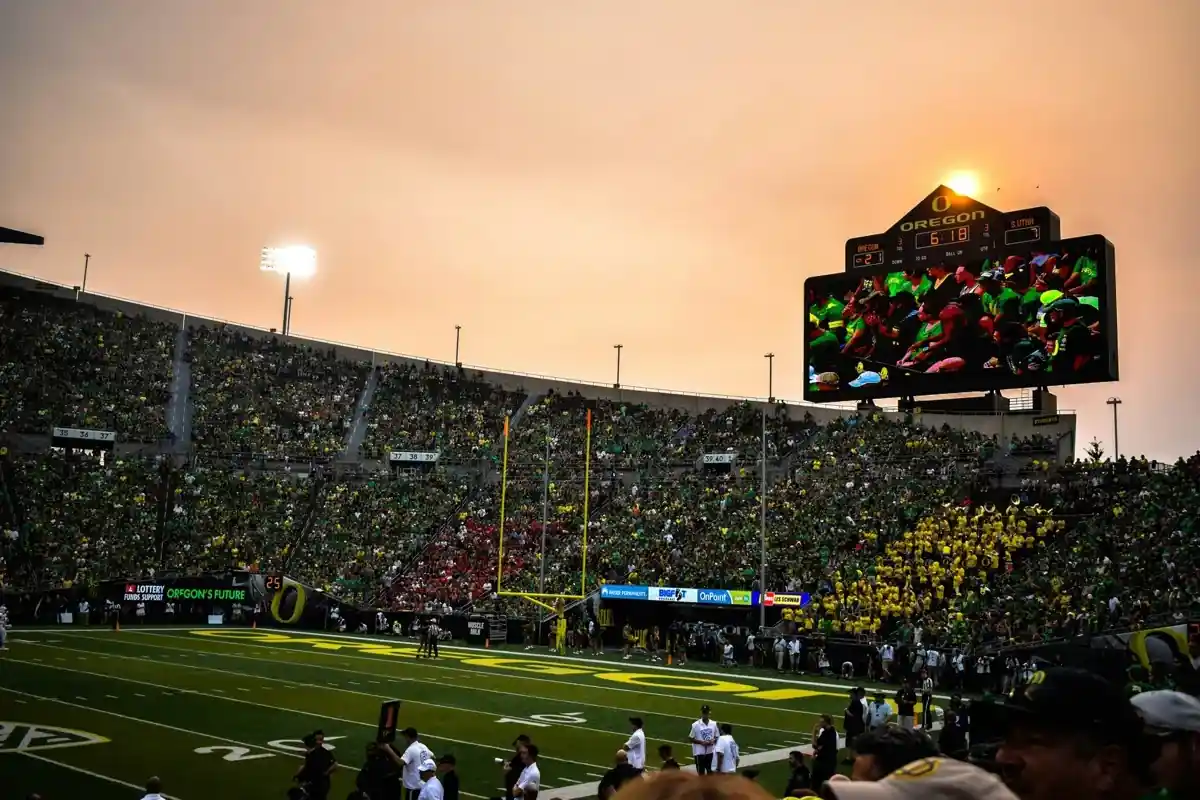
College football prediction markets turn the season into live prices: who wins the national title, who lifts the Heisman, which teams reach the 12-team Playoff, and who takes each of the four Power conferences. Once the season kicks off, weekly game markets on individual matchups join the board and settle within days, so the set grows every week. A national title contract on Texas trades in cents that read as the market's probability that Texas wins, and it pays a dollar if Texas lifts the trophy on January 25, 2027. If you're coming from a sportsbook, prediction markets vs. sports betting covers how the exchange model differs.

An unusual number of 2026 contenders return their starting quarterback. Arch Manning at Texas, CJ Carr at Notre Dame, Dante Moore at Oregon, and Gunner Stockton at Georgia all work from a second or third year in the same system. Ohio State returns Julian Sayin into a new one: Arthur Smith took over play calling after Brian Hartline left in December, the third coordinator in Sayin's three years. The SEC and Big Ten, the two leagues that have produced most of the sport's recent champions, enter the season without a clear front runner. Miami (Darian Mensah), LSU (Sam Leavitt), Penn State (Rocco Becht), and Indiana (Josh Hoover) each hand the job to a transfer, turnover the market has to price before a snap is played.

The playoff holds at 12 teams for the 2026 season, the field size the Big Ten and SEC settled on in January 2026. The format for 2027 and beyond is unresolved, with the two conferences facing a December 1, 2026 deadline to choose between a 16-team and a 24-team field. Four automatic bids go to this season's Power conference champions regardless of final ranking, so a team can contend for the national title without ever reaching the top of the polls. Independent Notre Dame carries no conference title to fall back on; its bid depends on a final top-12 ranking from the committee.

What moves the prices during the season.

Four forces do most of the repricing between kickoff and the championship game.
  • Results over reputation. The selection committee weighs the resume, not the preseason ranking. Indiana opened 2025 outside the initial contenders, debuted at No. 2 in the first CFP rankings on an unbeaten record, then won the title outright.
  • Quarterback health. A single injury to a starter moves a team's price faster than any weekly result. A throwing-hand fracture limited Oklahoma's John Mateer for stretches of 2025 before he returned this season.
  • Portal and coaching turnover. Miami, LSU, Penn State, and Indiana each start a transfer quarterback, while Florida State, Wisconsin, and Baylor open the year with their head coaches on the hottest seats in the sport.
  • The two-venue gap. Ohio State and Indiana price higher on Polymarket than on Kalshi, while Texas and Notre Dame lead the Kalshi board. Kalshi runs the deeper book, so Polymarket's price is only directly comparable on the champion market.

How to read the college football markets.

Three separate contracts on the same team: The same team prices separately to make the 12-team field, to reach the national title game, and to win the championship, each a strictly harder bar than the one below it since it clears another round of a single-elimination bracket. The format has already crowned both ends: Ohio State won as a two-loss No. 8 seed in 2024, Indiana as an unbeaten No. 1 seed the next year. A team can price high to make the field and modest to win it with no contradiction; that gap is the market pricing survival through the bracket, not team quality alone.

A conference title is its own route into the field: The four Power conference titles are automatic playoff bids, which is why a conference contract and a make-the-field contract on the same team move together. A team can win its league from well outside the top ten and be in the field anyway. The fifth automatic bid goes to the highest ranked Group of Six team, which does not have to win its own conference.

Event dates and trading dates are not the same thing: The national champion is decided by one game, the College Football Playoff National Championship on January 25, 2027 at Allegiant Stadium in Las Vegas, with no poll involved. That date is when the outcome becomes known, not when the contract stops trading. Kalshi publishes three separate timestamps for a market: when trading closes, when the result is expected to be known, and the latest the contract can expire. On the Heisman and Coach of the Year boards those dates sit two weeks apart, so the phrase "the end date" means nothing unless it names which one.

These markets resolve one team at a time: A single settlement date is the wrong way to think about the group markets. In the playoff field market, each team resolves No as soon as it is eliminated from contention, so most of the board is settled well before the field is announced on December 6, 2026. The Heisman works the same way: contenders left off the finalist list on December 7 resolve No five days before the ceremony. An undefeated season contract is decided by the regular season alone and does not depend on the playoff at all.

Total Volume
Active Markets
Platforms
These totals count the featured markets below. The scanner carries all live college football markets from both platforms.

Season and playoff timeline.

Aug 27, 2026
Week 0 kicks off
Market impact: The first games of the season, more than a week before the main opening slate
Sep 5, 2026
Week 1
Market impact: The full opening slate on Labor Day weekend; early results start moving playoff and title prices
Dec 4-5, 2026
Conference championship weekend
Market impact: Ten league title games decide the conference markets and lock four automatic playoff bids; the Big 12 plays Friday, the rest Saturday
Dec 6, 2026
CFP Selection Day
Market impact: The 12-team field and seeding are announced; the make-the-field contracts still open are decided
Dec 12, 2026
Heisman Trophy ceremony
Market impact: The winner is announced; non-finalists were already decided by the December 7 finalist list
Dec 18-19, 2026
CFP first round
Market impact: Seeds 5 through 12 play on the higher seed's home campus; four teams are eliminated
Dec 30, 2026 to Jan 1, 2027
CFP quarterfinals
Market impact: Fiesta Bowl on December 30, then the Cotton, Peach, and Rose Bowls on January 1 in an order set on Selection Day; the field narrows to four
Jan 14-15, 2027
CFP semifinals
Market impact: Orange Bowl and Sugar Bowl; the title-game market resolves to two teams
Jan 25, 2027
National Championship, Las Vegas
Market impact: Allegiant Stadium; the national champion market resolves on this single game

Recent national champions.

Across the twelve College Football Playoff seasons, 2014 through 2025, a preseason AP No. 1 won the title once, and a preseason top-four team won it in eight of the twelve. Indiana's 2025 run from preseason No. 20 shows the field is not closed to a real outlier.
SeasonChampionPreseason AP rank
2014Ohio StateNo. 5, outside the top 4
2015AlabamaNo. 3
2016ClemsonNo. 2
2017AlabamaNo. 1
2018ClemsonNo. 2
2019LSUNo. 6, outside the top 4
2020AlabamaNo. 3
2021GeorgiaNo. 5, outside the top 4
2022GeorgiaNo. 3
2023MichiganNo. 2
2024Ohio StateNo. 2
2025IndianaNo. 20, outside the top 4

Recent Heisman winners.

Quarterbacks won eight of the last ten Heisman Trophies; the exceptions were Alabama receiver DeVonta Smith in 2020 and Colorado two-way player Travis Hunter in 2024. The preseason favorite does not reliably win: Arch Manning led the 2025 preseason Heisman market on Kalshi and Fernando Mendoza took the trophy.
SeasonWinnerSchoolPosition
2016Lamar JacksonLouisvilleQB
2017Baker MayfieldOklahomaQB
2018Kyler MurrayOklahomaQB
2019Joe BurrowLSUQB
2020DeVonta SmithAlabamaWR
2021Bryce YoungAlabamaQB
2022Caleb WilliamsUSCQB
2023Jayden DanielsLSUQB
2024Travis HunterColoradoCB/WR
2025Fernando MendozaIndianaQB

How the 12-team College Football Playoff works.

The field stays at 12 teams for the 2026 season; the format from 2027 on is unsettled, with the Big Ten and SEC facing a December 1, 2026 deadline to choose between a 16-team and a 24-team field. The bid and seeding rules explain why the make-the-field and win-it markets price the same team so differently.
ComponentHow it works
Automatic bidsFive in all. Four go to the champions of the ACC, Big 12, Big Ten, and SEC regardless of ranking; the fifth goes to the highest-ranked Group of Six team, which need not be its own conference champion.
Notre DameAs an independent, Notre Dame is guaranteed a bid if it finishes anywhere in the CFP top 12.
At-large bidsSeven bids fill out the field, given to the next-highest-ranked teams by the selection committee.
SeedingTeams are seeded 1 through 12 by the committee ranking, not reserved for conference champions.
First-round byesOnly the top four seeds sit out the first round.
First roundSeeds 5 through 12 play December 18 and 19, 2026, hosted on the higher seed's home campus.
Quarterfinals and semifinalsThe Fiesta, Cotton, Rose, and Peach Bowls host quarterfinals; the Orange and Sugar Bowls host semifinals.
National ChampionshipA neutral site awarded by bid. Allegiant Stadium in Las Vegas hosts the January 25, 2027 title game.

Live college football markets.

events · markets
KLSH
National Title markets
National championship winner (Kalshi)
Notre Dame
POLY
National Title markets
National championship winner (Polymarket)
Notre Dame Fighting Irish
KLSH
Playoff Path markets
Reach the -team Playoff field
LSU-
KLSH
Playoff Path markets
Reach the national title game
LSU-
KLSH
Heisman markets
Heisman Trophy winner
CJ Carr
KLSH
Conference Titles markets
Conference of the national champion
Big Ten
KLSH
Conference Titles markets
SEC Championship winner
Georgia
KLSH
Conference Titles markets
Big Ten Championship winner
Ohio St.
KLSH
Conference Titles markets
Big Championship winner
Texas Tech
KLSH
Conference Titles markets
ACC Championship winner
Miami (FL)
KLSH
Conference Titles markets
Mountain West Championship winner
New Mexico
KLSH
Conference Titles markets
Pac- Championship winner
Boise St.
KLSH
Conference Titles markets
American Conference Championship winner
Navy
KLSH
Conference Titles markets
MAC Championship winner
Miami (OH)
KLSH
Conference Titles markets
Conference USA Championship winner
Liberty
KLSH
Conference Titles markets
Sun Belt Championship winner
Marshall
KLSH
Win Totals markets
South Carolina regular-season wins
+ wins
KLSH
Win Totals markets
Oklahoma St. regular-season wins
+ wins+
KLSH
Win Totals markets
Florida regular-season wins
+ wins
KLSH
Win Totals markets
Georgia Tech regular-season wins
+ wins-
KLSH
Win Totals markets
BYU regular-season wins
+ wins
KLSH
Win Totals markets
Alabama regular-season wins
+ wins
KLSH
Win Totals markets
Oklahoma regular-season wins
+ wins
KLSH
Win Totals markets
Ole Miss regular-season wins
+ wins+
KLSH
Win Totals markets
Texas regular-season wins
+ wins+
KLSH
Win Totals markets
Tennessee regular-season wins
+ wins
KLSH
Win Totals markets
Texas Tech regular-season wins
+ wins+
KLSH
Win Totals markets
Indiana regular-season wins
+ wins
KLSH
Win Totals
Utah regular-season wins
+ wins-
KLSH
Win Totals markets
LSU regular-season wins
+ wins
KLSH
Win Totals markets
Nebraska regular-season wins
+ wins-
KLSH
Win Totals
Missouri regular-season wins
+ wins-
KLSH
Win Totals markets
Ohio St. regular-season wins
+ wins
KLSH
Win Totals markets
Arkansas regular-season wins
+ wins-
KLSH
Win Totals markets
Michigan regular-season wins
+ wins
KLSH
Win Totals
Georgia regular-season wins
+ wins
KLSH
Win Totals markets
Florida St. regular-season wins
+ wins
KLSH
Win Totals markets
USC regular-season wins
+ wins-
KLSH
Win Totals markets
Mississippi St. regular-season wins
+ wins-
KLSH
Win Totals
Auburn regular-season wins
+ wins
KLSH
Win Totals
Notre Dame regular-season wins
wins
KLSH
Win Totals
Tulane regular-season wins
+ wins
KLSH
Win Totals
Texas A&M regular-season wins
+ wins
KLSH
Win Totals
Boston College regular-season wins
+ wins
KLSH
Win Totals
Oregon regular-season wins
+ wins
KLSH
Win Totals
Iowa regular-season wins
+ wins
KLSH
Win Totals
Virginia regular-season wins
+ wins
KLSH
Win Totals
Miami (FL) regular-season wins
+ wins+
KLSH
Win Totals
Clemson regular-season wins
+ wins-
KLSH
Season Storylines markets
Undefeated regular season
Texas Tech+
KLSH
Season Storylines markets
Coach of the Year
Mario Cristobal

Frequently asked questions.

  1. What am I buying when I trade a college football market?

    A contract on a single outcome, like a specific team winning the national title or reaching the Playoff field. Its price in cents reads as the market's live probability of that outcome; the contract pays a dollar if it happens and nothing if it does not. The same structure covers the Heisman, the four conference races, and season-long contracts like an undefeated regular season.

  2. Where can college football markets be traded, and are they available in the US?

    Kalshi is a US-regulated exchange and carries almost all of the college-football liquidity: the national title, Heisman, all four Power conference races, and the playoff field. Polymarket lists only the national champion market; it does not carry a live make-the-field or conference-title market for college football.

  3. How is the national champion decided, and when does the market settle?

    The College Football Playoff National Championship is a single game between the two teams that survive the 12-team bracket; no poll or committee vote decides it. For the 2026 season that game is January 25, 2027 at Allegiant Stadium in Las Vegas, with the field set on December 6, 2026 and the four conference titles decided the day before.

  4. What is the difference between the make-the-Playoff market and the win-it-all market?

    Make-the-field asks whether a team reaches the 12-team bracket at all; win-it-all asks whether it survives every round after that. The two are not the same question: winning one of the four Power conference titles is close to an automatic berth regardless of record, while an at-large bid depends on the committee's read of the whole resume. Alabama reached the 2025 field at 10-3 as an at-large, seeded ninth, so the at-large bar bends further than it looks.

  5. Why do Kalshi and Polymarket price the same team differently?

    The two platforms draw from different pools of traders, so the same outcome can carry two different live probabilities. On the national title, Ohio State and Indiana price higher on Polymarket than on Kalshi, while Texas and Notre Dame lead the Kalshi board. Neither price is more official; each is what that platform's traders will pay.

  6. Do preseason favorites usually win the national title?

    Often, but not automatically. Across the twelve College Football Playoff seasons, a preseason No. 1 team has won the title once, and a preseason top-four team has won it in eight of those twelve. Indiana's 2025 title, from a preseason ranking of No. 20, shows the format can produce a real outlier, though that kind of run stays rare.

Robert C.
Robert C.

Founder & CMO

Legal training meets poker bankroll management. 10 years of content marketing scaled to millions of pageviews. Runs the editorial side, turning platform research and live market data into the answers traders actually search for.

More in Sports & Entertainment.
Reality TV predictions 2026: Big Brother 28, Bachelorette spoilers, and Dancing with the Stars
Sports & Entertainment

Reality TV Predictions 2026: Big Brother 28 & Bachelorette

Live prediction markets for reality TV competition seasons: Big Brother 28 winner, placement and weekly eviction contracts on both venues, whether The Bachelorette Season 22 ever airs, plus Summer House, Dancing with the Stars and Tournament of Champions.
Billboard and Spotify prediction markets 2026: top artist, #1 song, and biggest album
Sports & Entertainment

Billboard & Spotify Predictions 2026: Top Artist, #1 Song & Album

Live prediction markets for music charts and streaming records: who tops Spotify, who wins the Billboard year, first-week album numbers, and Spotify platform metrics, priced across Polymarket and Kalshi.

Oscars, Emmys, Grammys, and the Game Awards: 2026-2027 awards season prediction markets
Sports & Entertainment

2026-2027 Awards Season Predictions: Oscars, Emmys & Grammys

Live prediction markets for awards season: the Oscars, Emmys, Grammys, and The Game Awards, priced across Polymarket and Kalshi, with the contract terms you need to read them.

Sports & Entertainment explainers.
jockeys racing on horses
Crossover

Why Bettors & Fantasy Players Move to Prediction Markets

Why sports bettors are moving to prediction markets, what you gain, and what you give up.

Beginner11 min read
money lit on fire
Crossover

Prediction Market Bankroll Management: Guide to Sizing

Learn how to size prediction market positions and manage correlation risk.
Intermediate11 min read
Tony Roma's race and sports book
Crossover

Sportsbook vs. Exchange: How Prediction Markets Set Lines

Learn how CLOB, AMM, and hybrid models set prices, and what it means for your edge.

Intermediate10 min read

Join the community.

Last updated