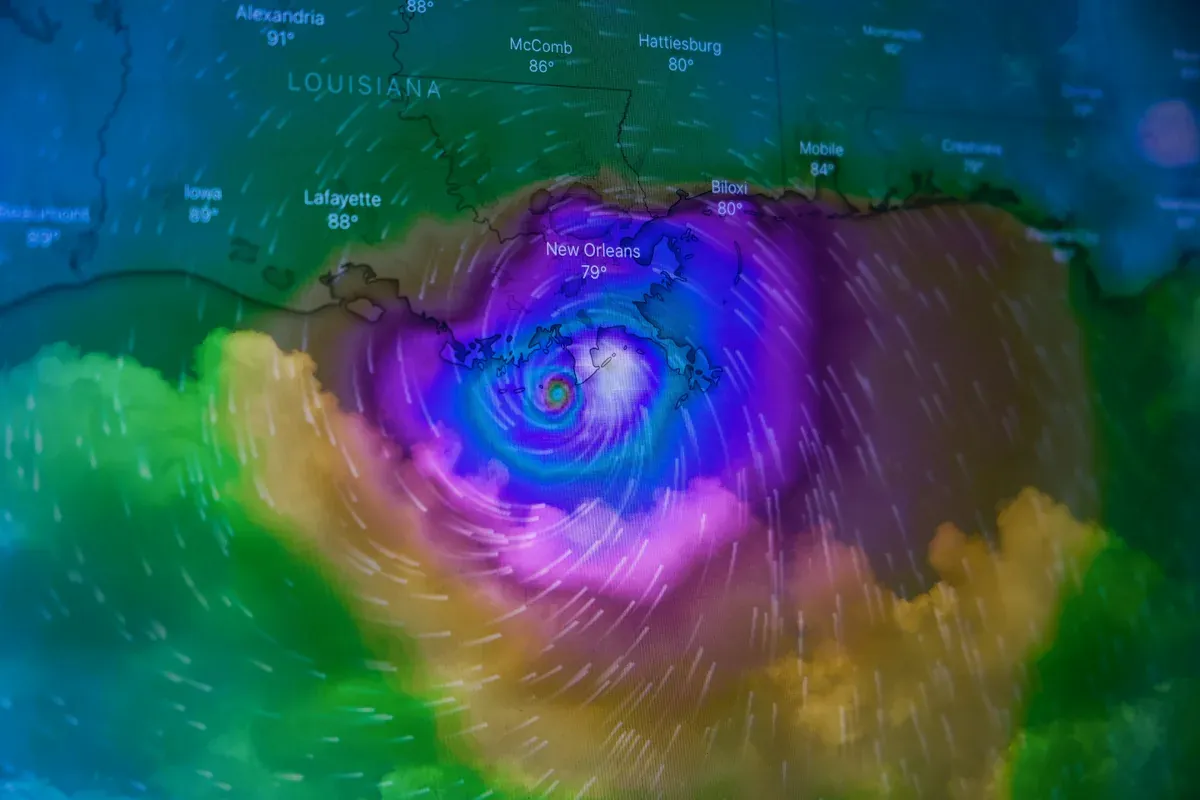
Skip to content
2026 Atlantic hurricane season: odds and predictions

Skip to content
Chironus.
LIVEClimate & Weather· June 30, 2026

2026 Atlantic hurricane season: odds and predictions

2026 Atlantic hurricane season: odds and predictions

Key highlights

  • The 2026 Atlantic hurricane season runs June 1 to November 30, and forecasters expect a below-average year. NOAA's preseason outlook calls for 8 to 14 named storms, 3 to 6 hurricanes, and 1 to 3 major hurricanes.
  • A strengthening El Nino is the reason. El Nino raises wind shear over the Atlantic, which tends to tear storms apart before they organize, and Colorado State trimmed its June forecast to 11 named storms and 5 hurricanes on that signal.
  • A quieter forecast is not a safe one. The season still carries a real chance of a major hurricane reaching the US coast, and the strongest storms drive most of the damage. NOAA finds that major hurricanes are only about 21 percent of US landfalling tropical cyclones but cause roughly 83 percent of the damage.
The 2026 Atlantic hurricane season opened on June 1 and runs through November 30, and the central questions are simple: how many storms form, and does a major one reach the United States. Forecasters lean toward a below-average year. A typical season produces 14 named storms, 7 hurricanes, and 3 major hurricanes; NOAA's 2026 outlook sits under that, and Colorado State lowered its numbers again in June. The driver is a strengthening El Nino, which intensifies upper-level winds across the basin and makes storms harder to organize. Polymarket and Kalshi now price every piece of that picture in real time, from the basin-wide storm count to whether a Category 4 or Category 5 reaches the coast.

What will shape the 2026 Atlantic hurricane season.

A below-average forecast still leaves a wide range of outcomes. These are the factors that will decide where the 2026 season lands:
  • El Nino strength: NOAA upgraded its El Nino Watch to an Advisory on June 11, 2026, and a moderate-to-strong El Nino raises Atlantic wind shear and suppresses storm formation, the single biggest reason the 2026 outlooks sit below the long-term normal
  • Sea surface temperatures: warm ocean water is the fuel hurricanes run on, so it matters that the eastern and central tropical Atlantic ran cooler through the spring than the record-warm seasons before it, which is part of why Colorado State cut its June outlook
  • The climatological peak: the overwhelming majority of major-hurricane activity comes between mid-August and mid-October, so a slow June and July say little about the final count
  • Landfall geometry: steering patterns, not just storm count, decide whether systems curve out to sea or track toward the Gulf and the East Coast
  • Accumulated Cyclone Energy: the metric that captures total seasonal intensity, where Colorado State's June outlook sits below the long-term norm

How prediction markets price the 2026 season.

Storm and hurricane counts: Kalshi runs threshold markets on the total number of named storms, hurricanes, and major hurricanes the Atlantic produces in 2026. Read together they reveal the market-implied range for the season, which you can compare directly against the NOAA and Colorado State forecasts.

US landfall risk: Polymarket carries the two markets that matter most for damage: whether any Category 4 and any Category 5 hurricane makes landfall in the United States before 2027. These price the tail risk that a quiet-sounding season can still turn destructive.

First named storm: A mutually exclusive Kalshi market prices which name the first Atlantic hurricane of 2026 will carry. The list runs alphabetically, and Arthur was already spent on a June tropical storm that never reached hurricane strength, so the live market effectively runs from Bertha onward and reads as how early the first hurricane forms.

Eastern Pacific: Kalshi prices the first named Eastern Pacific hurricane and the basin storm count. El Nino tends to do the opposite of the Atlantic here and lift activity: NOAA forecasts an above-normal Eastern Pacific season, and the basin had its most active opening since 1985, with Amanda, Boris, and Cristina all forming in early June. The Eastern Pacific reads as the same climate signal from the other side.

Forecast against market: The value of the page is the side by side. Meteorologists publish a seasonal forecast a few times a year; the markets update continuously as storms form, weaken, and make landfall.

The temperature signal: warm ocean water is the fuel hurricanes run on, and that warmth trades directly. 2026 is a top contender for the hottest year on record on both Kalshi and Polymarket, a read on the global average temperature that is driven in large part by ocean heat. A hot planet does not mean a busy Atlantic, though. The same El Nino that is lifting global temperatures and the Eastern Pacific season is shearing the Atlantic and leaving its main development region cooler, so 2026 can run hot worldwide and still finish below average here. That split is the core story of the season.

Total Volume
Active Markets
Platforms

Season timeline.

Jun 1
Season opens
Market impact: Atlantic hurricane season officially begins; full-season count markets are live
Jun 17
First storm, Arthur
Market impact: Tropical Storm Arthur forms off Texas but stays below hurricane strength; the hurricane and landfall markets stay open
Jul
Early-season lull, CSU update
Market impact: A quiet stretch is typical; Colorado State issues an early-July forecast update that can move the count ladders
Aug
Activity ramps up, NOAA update
Market impact: The climatological ramp begins and NOAA issues its early-August seasonal update; storm-count and landfall markets get more active
Sep 10
Climatological peak
Market impact: The statistical peak of the season; major-hurricane and landfall risk are highest
Oct
Late-season Gulf risk
Market impact: Gulf of Mexico systems are common; US landfall markets stay live
Nov 30
Season closes
Market impact: The season officially ends; attention turns to final National Hurricane Center totals
Dec 1
Count markets settle
Market impact: Named-storm, hurricane, and major-hurricane count markets resolve against the official totals

2026 seasonal forecasts compared.

Preseason outlooks from the two most-cited forecasters, set against the long-term normal.
SourceNamed stormsHurricanesMajorNote
NOAA outlook (May 2026)8 to 143 to 61 to 3Below-average call; El Nino expected to develop
Colorado State (June 2026)1152Cut from April on El Nino and a cooler eastern and central tropical Atlantic; ACE near 70
Long-term average1473NOAA 1991 to 2020 climatological normal

Notable Atlantic hurricanes and their economic toll.

A major Atlantic hurricane does not just destroy property, it reprices markets: insurer solvency, Gulf energy and gasoline, and at the extreme the stock market itself. Damage is shown on the NOAA NCEI 2024 inflation-adjusted basis.
Storm (year)Damage (2024 dollars)Economic and market impact
Katrina (2005)$201.3BShut in roughly 90 percent of Gulf oil output; the CPI energy index jumped 12.0 percent in September 2005 alone; Louisiana payrolls fell by 241,000.
Harvey (2017)$160.0BIdled about a third of Gulf Coast refining capacity, with utilization falling from 96 to 63 percent, and sent gasoline futures to a two-year high near $1.78 a gallon.
Ian (2022)$119.6BDeepened the Florida insurance crisis: six carriers went insolvent in 2022, and Florida premiums now run close to triple the US average.
Maria (2017)$115.2BKnocked out the Puerto Rico power grid island-wide; a George Washington University study estimated about 2,975 excess deaths.
Sandy (2012)$88.5BClosed the NYSE and NASDAQ for two days, October 29 to 30, 2012, the first multi-day weather shutdown since the 1888 blizzard.
Ida (2021)$84.6BShut in about 95 percent of Gulf oil output, then dropped roughly $8B to $10B of flash-flood damage on New Jersey alone as it tracked north.
Andrew (1992)$60.5BDrove a wave of Florida insurer insolvencies and nearly doubled catastrophe-reinsurance prices; created the residual market that became Citizens Property Insurance.

Saffir-Simpson hurricane scale.

CategorySustained windsDamage potential
Tropical storm39 to 73 mphReceives a name; gusty winds and heavy rain
Category 174 to 95 mphVery dangerous winds; some roof and tree damage
Category 296 to 110 mphExtensive damage; near-total power loss possible
Category 3 (major)111 to 129 mphDevastating; well-built homes lose roof decking
Category 4 (major)130 to 156 mphCatastrophic; areas uninhabitable for weeks
Category 5 (major)157 mph or higherCatastrophic; total structural failure common

Key terms.

TermDefinition
Named stormA tropical or subtropical cyclone with sustained winds of at least 39 mph; it is assigned a name from the seasonal list.
HurricaneA tropical cyclone with sustained winds of at least 74 mph, which is Category 1 or higher.
Major hurricaneCategory 3 or higher, with winds of at least 111 mph. Major hurricanes cause the large majority of US hurricane damage.
ACEAccumulated Cyclone Energy, a single number that captures the combined strength and duration of a season.
LandfallWhen the center of a storm crosses a coastline. Landfall location and intensity drive damage far more than the season-wide count.
El NinoA warming of the eastern Pacific that raises Atlantic wind shear and tends to suppress hurricane formation.

hurricane prediction markets.

events · markets

POLY
US Landfall
Will a Category hurricane make US landfall in ?
Category US landfall-
POLY
US Landfall
Will a Category hurricane make US landfall in ?
Category US landfall
KLSH
Atlantic Season markets
How many Atlantic hurricanes in ?
More than
KLSH
Atlantic Season markets
How many major Atlantic hurricanes in ?
More than -
KLSH
Atlantic Season markets
How many named tropical storms in the Atlantic in ?
More than +
KLSH
First Storm markets
First named Atlantic hurricane of ?
Dolly
KLSH
Eastern Pacific marketsRESOLVED
First named Eastern Pacific hurricane of ?
Fausto
KLSH
Eastern Pacific
How many Eastern Pacific named storms in ?
More than +

Frequently asked questions.

  1. Can you bet on the 2026 Atlantic hurricane season?

    Yes. Kalshi and Polymarket both list markets on the 2026 season: how many named storms, hurricanes, and major hurricanes form, whether a Category 4 or Category 5 makes US landfall, and which name the first hurricane carries. Every market links straight to the live contract.

  2. Where can you trade 2026 hurricane markets?

    Kalshi runs the season-count and first-storm markets; Polymarket carries the two US landfall markets, Category 4 and Category 5. The cards show live prices from both platforms side by side.

  3. What do prediction markets say about the 2026 Atlantic hurricane season?

    The markets have priced a below-average but not quiet season, tracking close to the Colorado State forecast and near the low end of NOAA's range. The live prices move as storms form and the forecasts update.

  4. When is the 2026 Atlantic hurricane season?

    June 1 to November 30, 2026. Almost all major-hurricane activity falls between mid-August and mid-October, and the statistical peak is around September 10.

  5. Has the 2026 Atlantic hurricane season produced any storms yet?

    Yes. Tropical Storm Arthur, the first named storm of 2026, formed off the Texas coast on June 17 but stayed below hurricane strength and weakened within a day. None of the hurricane or landfall markets turn on a tropical storm, so they all remain open.

  6. Will the 2026 Atlantic hurricane season be bad?

    Forecasters expect a below-average year because a strengthening El Nino raises wind shear over the Atlantic. A quieter forecast is not a safe one: a single major-hurricane landfall drives most of the damage in any season, so the US landfall markets are the ones to watch.

  7. How many hurricanes are forecast for 2026?

    NOAA calls for 3 to 6 hurricanes (8 to 14 named storms, 1 to 3 major). Colorado State lowered its June outlook to 5 hurricanes (11 named storms, 2 major). Both sit below the 1991 to 2020 average of 7 hurricanes.

Robert C.
Robert C.

Founder & CMO

Legal training meets poker bankroll management. 10 years of content marketing scaled to millions of pageviews. Runs the editorial side, turning platform research and live market data into the answers traders actually search for.

More in Climate & Weather.
2026 heat and temperature predictions: hottest year, heat domes, and climate records
Climate & Weather

2026 Heat & Temperature Predictions: Hottest Year Markets

Live market prices on 2026 heat and temperature records: the hottest year, daily city highs, heat domes, Arctic sea ice, and atmospheric CO2, set against NASA, NOAA, and NSIDC data.

Pandemic odds 2026: bird flu, measles, and Ebola predictions
Climate & Weather

Pandemic Odds 2026: Bird Flu, Measles, and Ebola Predictions

A large Ebola outbreak is a declared emergency that WHO says is not a pandemic. See how a pandemic actually gets declared, the record since 2000, and the live markets pricing bird flu, measles, and Ebola.

2026 earthquake and volcano predictions: counts, megaquakes, and eruptions
Climate & Weather

Earthquake & Volcano Predictions: Live Market Prices

Live market prices on earthquakes and volcanic eruptions, set against the science: worldwide magnitude 7.0+ counts, megaquake and regional risk, and VEI 4+ eruption markets.

Climate & Weather explainers.
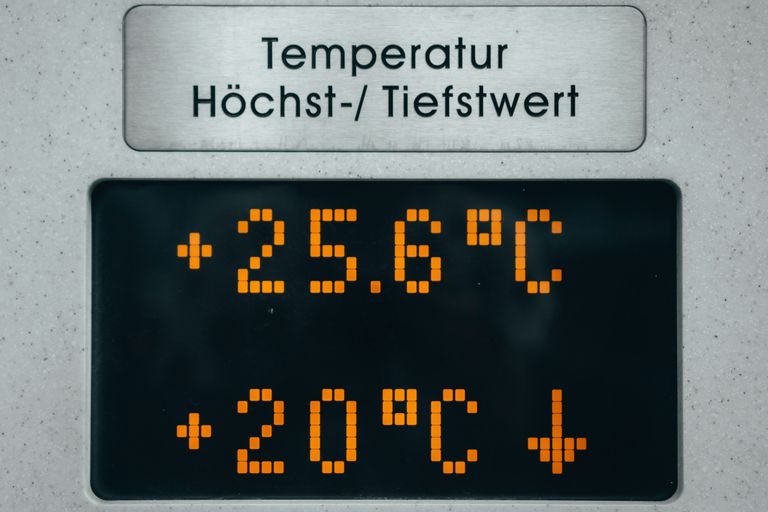
Digital weather station display showing a daily high of 25.6 degrees Celsius and a daily low of 20 degrees Celsius
Strategy

How to Trade Daily Weather Markets on Kalshi & Polymarket

A trader's guide to daily weather markets: how contracts settle station by station, where the free forecast data lives, and the fee math that decides which trades are worth taking.

Intermediate16 min read
A homeowner staring off the coast of Florida into a hurricane approaching
Climate & Weather

Using Climate Prediction Markets to Hedge Weather Risk

Climate prediction markets let you trade and hedge weather outcomes and manage real weather risk.

Beginner15 min read

Join the community.

Last updated